





Examination by an ear, nose and throat specialist
Suitable for:
Adults and children
Duration
~ 20 - 30 minutes
Preparation
Available epicrisis reports, tests and medications taken
Season
Year-round
An examination by an ear, nose, and throat specialist is aimed at diagnosing and treating diseases in the relevant areas. Our goal is to get to the cause of the symptoms and offer a clear treatment plan.
What symptoms and complaints require an examination by an ear, nose, and throat specialist?
- Sore throat, difficulty swallowing
- Blocked or runny nose, chronic runny nose
- Snoring during sleep, breathing through the mouth.
- Stopping breathing during sleep
- Sinusitis, heaviness and pain in the forehead/cheekbone area
- Tinnitus, hearing loss, and deafness
- Ear pain, feeling of pressure or discharge
- Frequent sore throats or upper respiratory tract infections
- A persistent cough that doesn't go away
- Hoarse voice, voice change, loss of voice
- Common illnesses in children – runny nose, purulent tonsillitis, ear infections, snoring, tired appearance with dark circles under the eyes.
If you recognize your symptoms on the list, now is a good time to make an appointment with an ENT specialist.
How is the examination by an ENT specialist performed?
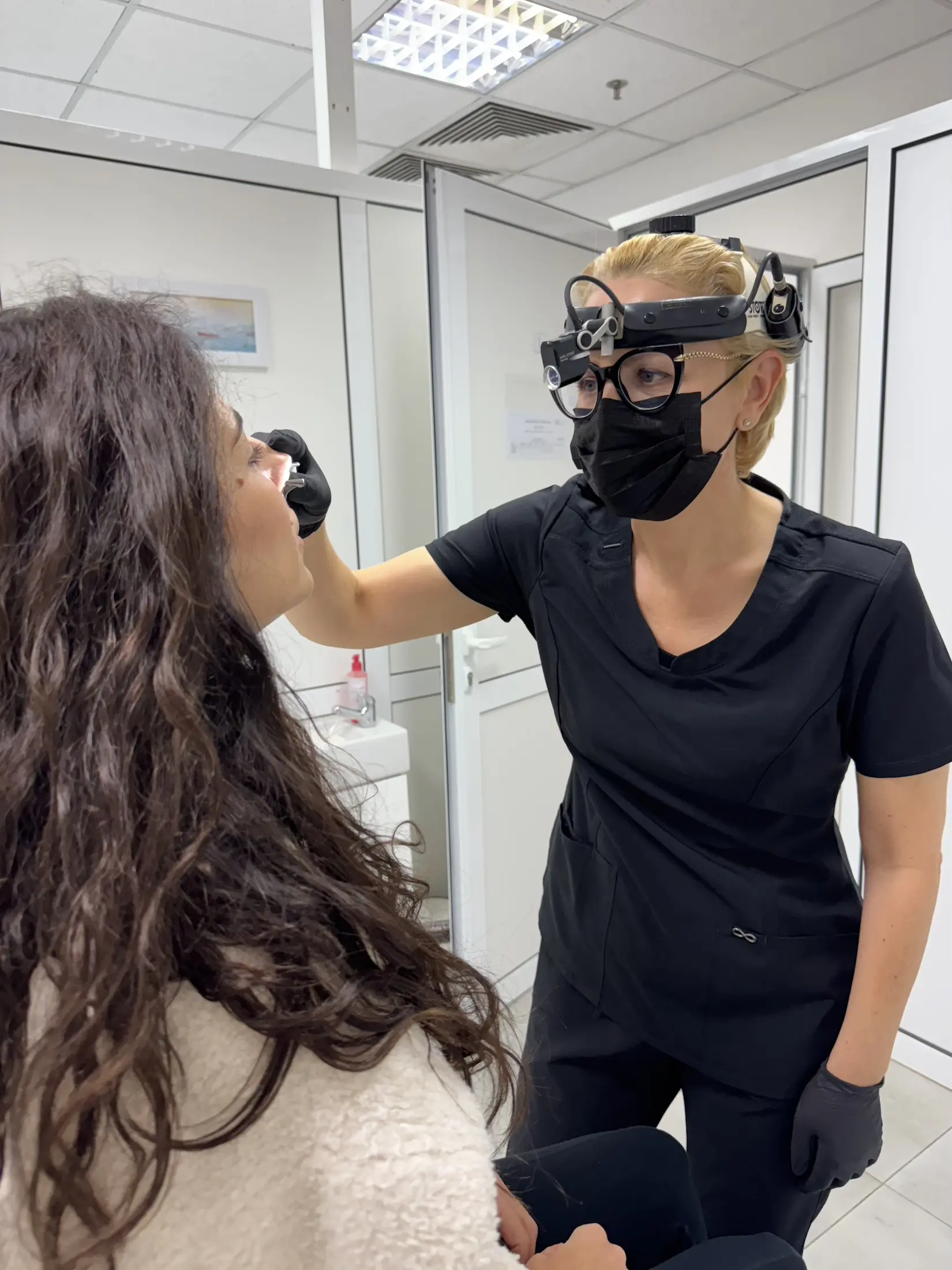
- Discussing your complaints and health condition
The doctor will ask you questions about your symptoms - when they started, how they change, do you have any concomitant diseases, are you taking medications, have there been previous similar cases. - Physical examination of the ears, nose, and throat
A careful examination using specialized instruments and light follows - an examination of the nasal cavity, throat, vocal cords /larynx/ auditory canal and eardrums. If necessary, we perform additional hearing tests using a tympanometer or an audiometer. If we suspect adenoid hyperplasia, inflammation, or other conditions affecting the nose and nasopharynx, or if you have problems with your vocal cords or larynx, we offer an endoscopic examination using a special camera. - Requesting additional tests if needed
If necessary, additional tests may be recommended – blood tests, imaging, additional consultations with other specialists, etc. This is discussed in detail with the patient. - Diagnosis, explanation and treatment plan
After the examination, the doctor will summarize the likely diagnosis, the treatment options, and will prepare an individual plan - medications, local therapies, check-ups, and recommendations for home care, and if necessary, hospital treatment.
It is important to us that you leave with clarity – what is happening, what is coming up, and when to expect improvement.
Examples of conditions we work with
What conditions do we treat most often?
- Viral and bacterial infections of the throat (pharyngitis, tonsillitis, angina), peritonsillar and intratonsillar abscesses.
- Acute and chronic rhinitis, sinusitis, adenoid vegetation (third tonsil), nasal and sinus polyps
- Acute and chronic otitis (ear inflammation)
- Allergic rhinitis (allergic runny nose)
- Laryngitis, polyps and other formations of the vocal cords and larynx
- Chronic cough of suspected ENT origin
- Recurrent infections in children (ears, nose, throat)
When should you seek immediate medical attention from an ENT specialist?
Symptoms you shouldn't ignore:
- Severe ear pain that does not respond to painkillers
- Sudden loss or sharp deterioration of hearing
- Difficulty breathing, severe shortness of breath, feeling of "suffocation"
- High fever that does not go down or returns after a brief improvement
- Severe throat pain, difficulty swallowing or opening your mouth
- Dizziness, nausea, vomiting, unsteadiness in gait, impaired balance combined with complaints of ear pain.
!!! If you have the following symptoms, it is important to be examined as soon as possible to avoid complications.
Frequently Asked Question
Do I need a doctor referral to see an ENT specialist?
It is not required, as we do not work with the national health insurance. You only need to make an appointment with our ENT specialist. If you have previous tests or consultation results, bring them - they can be useful for a faster and more accurate assessment.
Do you also examine children?
Yes, we examine both adults and children. For our youngest patients, we allow more time to adjust so they feel calm and secure.
What do I need to bring with me?
We recommend you bring:
– previous epicrisis reports or conclusions from other doctors;
– results of blood and imaging tests, if any;
– a list of the medications you are currently taking;
– for children - information about past illnesses and vaccinations (if possible).
– previous epicrisis reports or conclusions from other doctors;
– results of blood and imaging tests, if any;
– a list of the medications you are currently taking;
– for children - information about past illnesses and vaccinations (if possible).
How long will the treatment last?
The duration depends on the specific condition - for acute infections it is usually from a few days to two weeks, while for chronic problems a longer period with follow-up examinations may be necessary. Your doctor will discuss this with you at your first appointment.
Do you work with insurance companies?
Reflex Medical Center serves patients from Bulgaria and abroad with medical insurance. When making an appointment you can specify the type of insurance so that we can give you additional information.